Capture the silent beauty of the celestial expanse. But to truly bring those distant galaxies and nebulae into view, you need the right tool. That’s where dedicated astrophotography cameras come in, transforming faint starlight into breathtaking images. They’re a game-changer compared to your regular DSLR.
We know choosing one can feel overwhelming with all the technical specs. Don’t worry, we’ve got you covered. This review will break down the key features and help you find the perfect camera to match your night sky ambitions and, just as importantly, your budget. Let’s dive into the details.
Product Comparison Table: 9 Best Astrophotography Cameras
| Image | Why We Like This Product | Editor’s Rating | |
 |
SVBONY SV305C Pro Telescope Camera, USB 3.0 High-Speed Transmission,…
|
9.7 |
Read Review |
 |
SVBONY SV305C Astrophotography Camera, 2.1MP IMX662 Color Telescope Camera…
|
9.4 |
Read Review |
 |
WiFi Telescope Camera Eyepiece, 64G Electronic Eyepiece Camera with…
|
9.2 |
Read Review |
 |
SVBONY SV105 Telescope Camera, 1.25″ USB2.0 IMX307 CMOS Color…
|
8.9 |
Read Review |
 |
SVBONY SV705C Telescope Camera, IMX585 Sensor Astronomy Camera with…
|
8.6 |
Read Review |
 |
SVBONY SC715C Telescope Planetary Camera, 1.45μm Micro Pixel IMX715…
|
8.4 |
Read Review |
 |
64GB Telescope Camera Digital Eyepiece: 2K Video Recording, WiFi…
|
8.1 |
Read Review |
 |
SVBONY SV205 Astrophotography Camera, 1.25″ 7.05MP IMX415 Sensor, USB3.0…
|
7.9 |
Read Review |
 |
Telescope Camera 4K, 8MP Astrophotography Camera – 1.25″ Telescope…
|
7.6 |
Read Review |
Quick Review For Top 9 Astrophotography Cameras
SVBONY SV305C Pro Telescope Camera, USB 3.0 High-Speed Transmission, 2MP IMX662 Sensor 128MB DDR Buffer, 1.25" CMOS Astrophotography Camera, Electronic Telescope Eyepiece for Astrophotography

The SVBONY SV305C Pro Telescope Camera is a dedicated tool for capturing the planets and moon. It’s designed to replace a traditional telescope eyepiece, connecting directly to your computer to bring the cosmos onto your screen. At its heart is a 2MP IMX662 sensor, chosen for its high sensitivity and low noise. This means it can capture clear planetary details even in relatively low light conditions, which is crucial for astrophotography. One of the cameras standout features is its speed.
It uses a USB 3.0 connection for data transfer, which is over ten times faster than older USB 2.0. This high-speed link is essential for handling the cameras impressive 107 frames per second at 1920×1080 resolution. That fast frame rate is what lets you freeze the atmosphere, capturing sharp, detailed images of fast-moving planets like Jupiter and its swirling clouds or Saturn’s intricate rings without motion blur. The SV305C Pro also excels at keeping image noise to a minimum.
It boasts an ultra-low readout noise of just 0.7e-, which translates to cleaner, sharper images with less grainy interference. For long imaging sessions, a special heat dissipation design helps maintain sensor stability, further reducing noise over time. Plus, the built-in 128MB DDR buffer acts like a quick storage pitstop, preventing any image loss during continuous capture so you don’t miss a critical moment. Flexibility is another key point. The camera supports a feature called Any Area ROI.
SVBONY SV305C Astrophotography Camera, 2.1MP IMX662 Color Telescope Camera with Removable UV IR Cut Glass, 1.25" Electronic Telescope Eyepiece for Planetary Moon Astrophotography&EAA

The SVBONY SV305C is a color astronomy camera designed to be a great starting point for capturing planets, the moon, and for Electronically Assisted Astronomy (EAA). It balances performance and accessibility, making it a practical tool for beginners entering the hobby.
At its core is a 2.1-megapixel IMX662 sensor. This is a back-illuminated sensor with 2.9µm pixels, which helps it gather light efficiently.
A key benefit is its high full-well capacity, meaning it can handle brighter areas in an image without overexposing to quickly. The sensor is also known for its low readout noise and absence of amp glow, leading to cleaner images. Its sensitivity, especially in the red part of the spectrum, is improved, which is beneficial for many astronomical targets.
To simplify operation, the camera includes pre-configured modes in popular software like SharpCap.
You can quickly select a planetary high-speed mode or a deep-sky long exposure mode with one click, and save your own settings for fast recall later. This helps you spend less time configuring and more time observing.
The camera includes a 128MB image buffer. This memory temporarily stores images if your computers USB connection gets interrupted or busy, helping to prevent lost frames during crucial captures. For planetary imaging, the ROI (Region of Interest) function is very useful.
WiFi Telescope Camera Eyepiece, 64G Electronic Eyepiece Camera with 1.5" Screen, Astronomy Camera Fits to 28mm- 50mm Scopes, Perfect for Astrophotography, Birds Watching

The WiFi Telescope Camera Eyepiece is a clever tool that bridges the gap between traditional observation and the digital world. At its core, it’s an electronic eyepiece that replaces the standard one on your optical device, letting you see a live video feed on its own screen or directly on your smartphone. This means you can observe without straining your eye against the telescope, making it more comfortable and shareable. One of its standout features is the built-in 1.5” IPS screen.
This mini display gives you a bright, color-accurate preview right on the device itself, perfect for quick setup and solo use. For more flexibility, you can connect it to your phone via WiFi. The connection supports two devices at once within a 49-foot range, so you and a friend can both view the feed on your seperate phones—great for teaching or sharing the moment. It’s designed for versatility. With its standard mounting groove, it fits a wide range of scopes from 28mm to 50mm.
This means it pairs not just with astronomical telescopes for planets and the moon, but also with spotting scopes for bird watching, or even microscopes for a whole other world of detail. It truly opens up multiple hobbies with one gadget. For image quality, it captures in 1080P Full HD for video and takes 2MP photos. The camera includes dark light compensation to enhance veiws in low-light conditions, which is essential for astronomy or dusk wildlife observation.
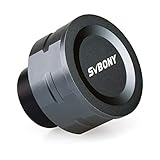
SVBONY SV105 Telescope Camera, 1.25" USB2.0 IMX307 CMOS Color Astrophotography Camera, Electronic Telescope Eyepiece for Telescope, Suitable for Astrophotography Beginners
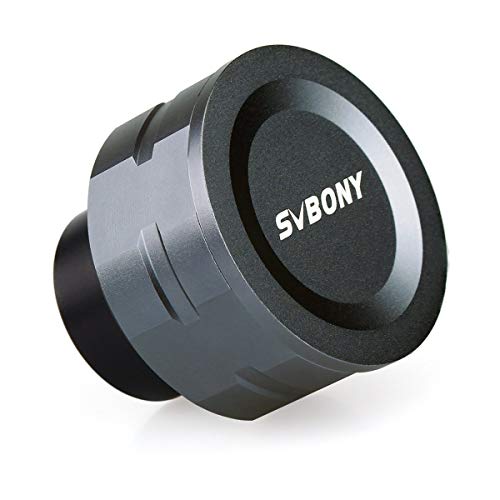
The SVBONY SV105 Telescope Camera is a 1.25-inch USB camera designed to be your first step into astrophotography. It replaces a standard telescope eyepiece, letting you capture images and video directly on your computer. If your curious about photographing the moon and planets but find dedicated astronomy cameras intimidating, this model aims to simplify the process. Its core purpose is lunar and planetary imaging.
You simply point your telescope at a bright target like the Moon, Jupiter, or Saturn, and the SV105 records a live video feed to your laptop. This real-time view is great for sharing with others or for capturing footage to process later. The camera uses a IMX307 CMOS sensor with dark light compensation, which helps improve image clarity in low-light conditions common in astronomy.
It can record at up to 30 frames per second in 1920×1080 resolution, allowing for high-speed 2K video which is ideal for stacking planetary images. A major highlight is its plug-and-play setup for Windows systems, requiring no additional drivers. You will need free software like SharpCap to capture the video. For Linux users, AstroDMx Capture is the go-to, and Android devices can use a generic USB camera app.
SVBONY SV705C Telescope Camera, IMX585 Sensor Astronomy Camera with USB 3.0, High Resolution Planets Camera, Astronomy Camera for Moon, Saturn, Planets and Deep Sky Astrophotography

The SVBONY SV705C Telescope Camera is designed for astronomers who want a versatile and capable sensor in a single device. It’s built around the sensitive Sony IMX585 back-illuminated sensor, which makes it a strong choice for more than just planetary snapshots.
This camera excels at planetary and lunar imaging, where its high resolution of 3856 by 2180 pixels captures fine details.
But it’s also powerful for Electronically Assisted Astronomy (EAA) and lucky imaging, giving you real-time or near-real-time views of brighter deep-sky objects. It even serves as a competent entry-level camera for dedicated deep sky astrophotography, making it a fantastic all-rounder for enthusiasts expanding their toolkit.
A key advantage of the IMX585 sensor is its performance in low light.
It has a full well capacity three times greater than sensors like the IMX485, meaning it can handle more light before overexposing, leading to a higher signal-to-noise ratio. This translates to cleaner, more detailed images with less noise, especially important in astronomy.
SVBONY SC715C Telescope Planetary Camera, 1.45μm Micro Pixel IMX715 Color Astronomy Camera, 512MB DDR3 Cache, Low Readout Noise, Electronic Eyepiece for Moon Planetary Astronomical Photography

The SVBONY SC715C Telescope Planetary Camera is designed for astronomers who want to capture detailed images of the moon and planets. Its core is the sensitive IMX715 color sensor, which has incredibly small 1.45-micron pixels. This design is key for planetary work, as it allows for high-resolution, 4K-level detail directly through your telescope, often without needing an extra Barlow lens to magnify the image.
The sensor also provides a high dynamic range and maintains low readout noise, which is crucial for preserving detail and color in the faint light of distant worlds.
To handle all that high-resolution data smoothly, the SC715C includes a 512MB DDR3 cache. This memory buffer minimizes delays and helps prevent dropped frames, weather your capturing a rapid-fire video of Jupiter’s rotation or a series of high-res image frames.
The data travels quickly to your computer via a USB 3.0 interface, supporting speeds up to 45.5 frames per second at full resolution. This means you get a stable, real-time view on your screen and lossless data transfer for the cleanest possible recordings.
For guiding during long-exposure astrophotography, the built-in ST4 autoguider port is a valuable feature. You can connect it directly to a compatible equatorial mount, allowing the system to make tiny corrections for tracking errors.
64GB Telescope Camera Digital Eyepiece: 2K Video Recording, WiFi Telescope Microscope Accessory, 25-50mm Eyepiece Adapter, Screen Support, App Control, Perfect for Astrophotography, Birds Watching

The 64GB Telescope Camera Digital Eyepiece is designed to bridge the gap between traditional observation and the digital world. If you’ve ever struggled to share what you see through your telescope or microscope, or wished you could capture it with more than just a memory, this accessory aims to simplify that process.
It’s essentially a camera that replaces your standard eyepiece, turning your optical device into a powerful digital recording tool.
Getting started is straightforward, thanks to its universal compatibility. The camera fits any telescope or microscope with eyepieces ranging from 25 to 50mm in diameter. You simply twist it into the eyepiece holder to lock it securely—no extra tools or adapters are needed for most setups.
This ease of use means you can be set up and ready to observe in a matter of seconds. Once attached, the real convenience begins with the built-in WiFi. The device creates its own hotspot, allowing you to connect your smartphone directly without needing an internet connection.
SVBONY SV205 Astrophotography Camera, 1.25" 7.05MP IMX415 Sensor, USB3.0 CMOS Telescope Camera, Electronic Telescope Eyepiece, Suitable for Astrophotography Beginners

The SVBONY SV205 Astrophotography Camera is a 1.25-inch electronic eyepiece designed to connect your telescope directly to your computer. It turns visual observation into a shared, recordable digital experience. This is particularly helpful for beginners entering the rewarding hobby of astrophotography. Its core is a 7.05MP IMX415 color sensor. This is a sensitive 1/2.8″ CMOS chip with a pixel size of 1.45µm.
The sensor employs dark light compensation technology, which enhances image clarity in low-light conditions. This is crucial for capturing details on planets and the moon. The machined aluminum adapter barrel has a standard 1.25-inch size. It threads directly onto most telescope focusers for a secure connection. A major advantage is the plug-and-play setup with no dedicated drivers needed. You simply connect the included 1.2-meter USB 3.0 cable to your Windows PC or laptop.
The camera facilitates real-time dynamic observation with a crystal clear image on your screen. This allows you to share the view of bright planets, the Moon, and even terrestrial targets with others. Friends and family can gather around your computer monitor, making astronomy a social activity. For recording, the SV205 offers flexibility. In MJPG video format, you can capture quick videos at up to 30 frames per second (FPS) in 2K resolution (1920×1080).
Telescope Camera 4K, 8MP Astrophotography Camera – 1.25" Telescope Electronic Eyepiece Camera with IR Filter, Plug & Play for Astronomy, Planetary Imaging, Compatible with Windows/Mac/Linux

The Telescope Camera 4K, 8MP Astrophotography Camera is designed to bridge the gap between observing the night sky and capturing it. It functions as an electronic eyepiece, replacing your traditional optical one to project a live video feed directly to your computer or laptop. This lets you share views with others, record what you see, and utilize software to enhance faint details in real-time. A major advantage is its straightforward setup.
The camera offers true plug-and-play compatibility across Windows, macOS, and Linux systems. You simply connect it via USB, and it’s recognized without needing to install seperate drivers. This means you can be up and running with UVC-compatible astronomy software in minutes, focusing on the sky rather than on complicated configuration. Its 8MP high-speed sensor is the core of its performance.
It captures smooth video at 1080p and 60 frames per second, or 4K resolution at 30fps, which is crucial for planetary imaging. When capturing planets, astronomers often record video to stack thousands of frames, teasing out incredible detail from the atmospheric turbulence. The sensor’s accurate color reproduction and enhanced low-light sensitivity also make it a capable tool for initial forays into capturing brighter nebulae and galaxies. The camera is built with practical astronomy in mind.
Astrophotography Cameras Buying Guide
Capture teh night sky by selecting a capable sensor. The right astrophotography cameras can make the difference between a grainy smudge and a stunning, detailed portrait of a nebula. This guide will help you understand the key factors to consider, so you can spend less time researching and more time under the stars.
Sensor Sensitivity and Cooling
Low light is your main challenge. A camera’s sensitivity, measured by its quantum efficiency (QE), determines how well it captures faint photons. Monochrome sensors typically have higher QE than color ones. More crucial is cooling. A built-in cooler reduces “thermal noise”—that grainy heat signal that ruins long exposures. A cooled camera lets you capture cleaner, deeper images without the noise.
Color vs. Monochrome Sensors
Here’s a big choice. A one-shot color (OSC) camera is convenient; it captures all colors at once, similar to a DSLR. A monochrome camera, however, captures more detail and light. To get a color image, you’ll need to take separate exposures through red, green, and blue filters. It’s more work, but the results are often sharper and more nuanced. Ask yourself: is convenience or ultimate image quality your priority?
Pixel Size and Resolution
Bigger pixels gather more light, which is great for wide-field shots of large nebulae. Smaller pixels offer higher resolution for planets or small galaxies, but thay require more precise tracking and excellent optics. Consider your telescope’s focal length and your typical targets. A mismatch here can lead to soft or inefficient images. It’s about pairing your camera with the rest of your gear.
Field of View and Connectivity
How much sky do you want in your frame? Your camera’s sensor size dictates this. A larger sensor captures a wider area, perfect for big Milky Way panoramas. Also, check how the camera connects to your computer. USB 3.0 is fast and reliable for downloading large image sequences, which is essential for a smooth imaging session. You don’t want your tech slowing you down on a clear night.
Frequently Asked Questions About Astrophotography Cameras
What’s teh main difference between a regular camera and an astrophotography camera?
A regular camera is designed for daytime photos. An astro camera is specialized for low light. It’s usually cooled to reduce sensor noise during long exposures. This lets you capture faint details in galaxies and nebulae much clearer.
Do I need a special telescope to use one of these cameras?
Not necessarily. You can often use them with a camera lens too. But they do connect to telescopes using standard adapters. The most important thing is having a sturdy mount that tracks the stars accurately.
What does ‘cooled’ mean for a camera sensor?
It means the camera has a built-in cooler. This lowers the sensor’s temperature. A cooler sensor produces less random noise, which is crucial for clean, detailed astrophotos. It’s a key feature for serious imagers.
Is a color or mono (monochrome) camera better for beginners?
Color cameras are generally easier to start with. You take all the color data in one shot. Mono cameras require separate filters for color, so they involve more steps. But they can capture more detail and are often faster. Color is great for learning the basics.
How important is megapixel count?
Sensor size and pixel size are often more important than megapixels alone. Larger pixels can gather more light, which is good for faint objects. A huge megapixel count on a tiny sensor isn’t always helpful. Consider your telescope’s field of view too.
Can I use my DSLR or mirrorless camera instead?
Absolutely. Many people start with a modified DSLR. It’s a fantastic and affordable way to learn. Dedicated astro cameras offer advantages like cooling and higher sensitivity, but a DSLR you already own is a perfect starting point.
What software do I need to use these cameras?
You’ll need capture software to control the camera. Popular free options include SharpCap and OBS. You’ll also need separate processing software, like Siril or DeepSkyStacker, to stack and edit all your image files afterwards. Theres a bit of a learning curve, but it’s very manageable.
Conclusion
Capturing the cosmos requires a camera built specifically for the task. It’s about having a tool that can see in the dark, collect faint light over time, and handle the unique challenges of a night under the stars. The right choice makes all the difference between a noisy, faint smudge and a detailed, vibrant image of a galaxy.
Remember, your best camera is the one you’ll use. Consider your budget, your current skill level, and the type of objects you want to photograph most. Whether you start with a modified DSLR or a dedicated monochrome model, stepping into the world of astrophotography cameras opens up a new way to see and connect with the universe. It’s a rewarding journey that starts with a single, well-chosen piece of gear.