Cost varies by resolution, type, and required features. So, when you start researching an electron microscope price, you’ll quickly see a huge range. It can feel overwhelming, from a desktop SEM to a massive TEM system. But don’t worry, we’re here to break it down for you.
Think of it like buying a car. The basic model gets you where you need to go, but the add-ons really define the final cost. We’ll look at what drives those numbers, so you can find the right tool for your lab’s budget and goals without any nasty surprises.
Product Comparison Table: 9 Best Electron Microscope Price
| Image | Why We Like This Product | Editor’s Rating | |
 |
The Microscope and How to Use It
|
9.5 |
Read Review |
 |
The Natural World Close-Up (Close-Up (Firefly))
|
9.3 |
Read Review |
 |
Microcosmos: Discovering The World Through Microscopic Images From 20…
|
9.2 |
Read Review |
 |
Science And Space Activity Book For Kids Ages 4-8:…
|
9.0 |
Read Review |
 |
The Human Body Close-Up
|
8.8 |
Read Review |
 |
Topics in Fluorescence Spectroscopy, Vol. 10: Advanced Concepts in…
|
8.6 |
Read Review |
 |
Characterization of High Tc Materials and Devices by Electron…
|
8.4 |
Read Review |
 |
Micrographia, Or, Some Physiological Descriptions Of Minute Bodies Made…
|
8.3 |
Read Review |
 |
Illustrated Price List of Microscopes, Microscopic Apparatus and Other…
|
8.1 |
Read Review |
Quick Review For Top 9 Electron Microscope Price
The Microscope and How to Use It
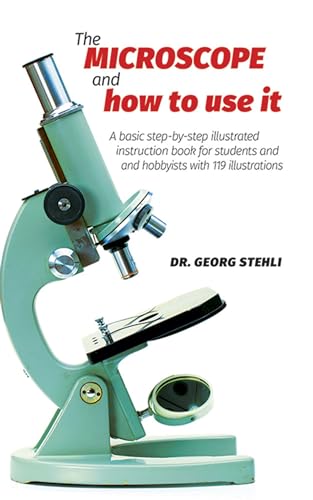
The Microscope and How to Use It is your straightforward guide to entering the world of tiny details. This book isn’t just a manual; it’s a friendly teacher that assumes you’re starting from scratch. It takes the mystery out of microscopy and gives you the confidence to operate your own instrument properly.
You’ll begin by getting to know the microscope itself. The book walks you through all the parts, from the eyepiece down to the light source.
You learn what each piece is called and, more importantly, what it does. This foundational knowledge is crucial. It means you’ll understand instructions clearly and can adjust your equipment with purpose. The text explains how to handle lenses, how to prepare simple slides, and the basics of illumination. Good lighting is everything in microscopy, and this guide makes sure you get it right.
Once you’re familiar with the hardware, the book shifts to technique.
It teaches you how to focus correctly, starting with the lowest magnification. This is a key step many beginners rush, but the book emphasizes its importance for finding your specimen and protecting the lenses. You’ll learn how to move up to higher powers smoothly. The instructions on preparing samples are particularly helpful. They show you how to look at common household items, making the whole process immediate and engaging.
The Natural World Close-Up (Close-Up (Firefly))

The Natural World Close-Up (Close-Up (Firefly))
This book is for anyone who’s ever paused to watch a bee on a flower or wondered about the pattern on a leaf right beneath their feet. It’s invitation to stop, look, and see the common world in a completely uncommon way. The ‘Close-Up’ series has a fantastic reputation for making the tiny details of our planet accessible, and this volume focusing on the natural world is a perfect example of that mission.
Imagine having a powerful magnifying glass that works on paper. That’s the experience this book offers. It presents a curated collection of extreme close-up photographs, capturing subjects from the intricate veins of a dragonfly’s wing to the surprising texture of a pine cone’s scale. The photography is the star here. Each image is sharp, brilliantly colored, and framed to highlight patterns, textures, and structures that are typically invisible to the naked eye.
You’ll see the world from an insect’s perspective, noticing the fine hairs on a plant stem or the geometric perfection of a honeycomb. It’s not just a gallery of pretty pictures, though. The accompanying text is clear and informative, written in plain language. It explains the ‘what’ and the ‘why’ behind each image. You’ll learn why a butterfly’s scales are shaped the way they are or how a spider’s silk is engineered.
Microcosmos: Discovering The World Through Microscopic Images From 20 X to Over 22 Million X Magnification
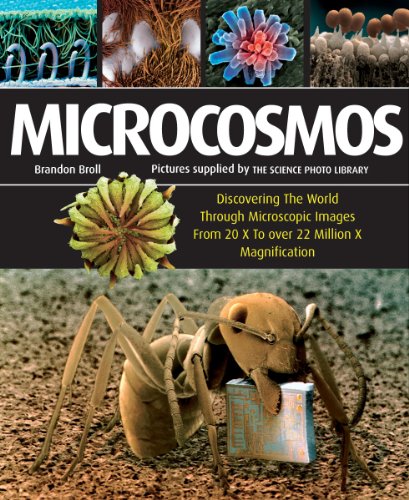
The Microcosmos: Discovering The World Through Microscopic Images is a book that fundamentally changes how you see the world around you. It presents a visual journey to scales invisible to the naked eye, letting you witness reality from 20 times all the way to over 22 million times magnification. This isn’t just a collection of pictures; it’s an access pass to an entire universe that exist right under our fingertips.
You’ll find yourself pausing on every page.
The detail captured at these extreme levels is humbling and awe-inspiring. From the intricate architecture of a butterfly’s wing to the alien landscape of a microchip, the book showcases subjects from nature, technology, medicine, and everyday objects. Each image is presented with clear context, so you understand exactly what your looking at and the incredible scale required to see it.
The progression from 20x to 22,000,000x is carefully curated, giving you a true sense of zooming deeper and deeper into the fabric of matter itself.
This book is for the curious mind. It’s perfect if you’ve ever wondered what salt really looks like up close, or the true form of a virus or a strand of DNA. It answers those questions with stunning clarity. The visual approach makes complex scientific concepts immediately graspable and engaging for readers of all ages.
Science And Space Activity Book For Kids Ages 4-8: Learn About Atoms, Magnets, Planets, Organisms, Insects, Dinosaurs, Satellites, Molecules, Photosynthesis, DNA, Amoebas, And More!

The Science And Space Activity Book For Kids Ages 4-8 is a fantastic first journey into the biggest ideas our universe has to offer. It’s designed to turn natural curiosity into real understanding, using fun activities to explain complex topics. You’ll find it covers an incredible range, from the tiny atoms that make up everything to the giant planets spinning in space. This book knows that kids learn best by doing.
So instead of just telling them about magnets, it has activities that let them feel the pull and push. Instead of just showing pictures of planets, it includes puzzles and projects that help them remember the order of our solar system. It connects the very small, like molecules and DNA, to the very big, like satellites and dinosaurs, showing how all science is linked. You’ll see your child begin to connect the dots between a plant’s photosynthesis and the energy we use.
One of the best things about this activity book is how it grows with your child. For a four-year-old, the activities might be about matching or simple coloring with a science fact. For an eight-year-old, the same topic is presented with a more detailed experiment or a maze that explains a concept like an organism’s life cycle. It takes subjects that can seem intimidating in older textbooks—like amoebas or atoms—and makes them friendly and approachable.
The Human Body Close-Up

The Human Body Close-Up
Have you ever wondered what your own skin really looks like, just beyond what your eyes can see? This isn’t about medical textbooks. It’s about seeing the landscape of your own self. The Human Body Close-Up is a specialized handheld digital microscope designed for personal curiosity. It connects directly to your phone or computer, turning your screen into a window to a world you carry with you every day. Think of it as a pocket-sized observatory.
The high-resolution lens magnifies up to 1000x, revealing details that are normally invisible. You can examine the texture of your fingerprint, seeing the unique ridges and whorls in intricate detail. Look at the back of your hand and watch the subtle lines and pores that make up your skin’s terrain. It’s a tool for genuine, personal observation, letting you satisfy a natural curiosity about your own biology.
The LED ring light is crucial for clear viewing, providing bright, even illumination without harsh shadows. You’ll need good light to see those tiny structures. The device is surprisingly simple to use. Just plug it into your smartphone’s port, open your camera app, and position the lens against what you want to see. It focuses by gently moving the device closer or farther away.
Topics in Fluorescence Spectroscopy, Vol. 10: Advanced Concepts in Fluorescence Sensing, Pt. B: Macromolecular Sensing

The ‘Topics in Fluorescence Spectroscopy, Vol. 10: Advanced Concepts in Fluorescence Sensing, Pt. B: Macromolecular Sensing’
If your work involves probing the complex world of large biological molecules, this volume serves as a critical reference. It’s not a casual introduction; it’s a focused continuation for researchers and advanced students already engaged in fluorescence sensing.
This book zeros in on the specific challenges and techniques for studying macromolecules—think proteins, nucleic acids, and big polymers. You’ll find the content is highly specialized, building directly on foundational concepts to address real-world analytical problems. The core of this text is its practical approach to sensor design for large-scale targets.
It goes beyond simple detection, discussing how to create systems that can report on conformational changes, binding events, and interactions in crowded biological environments. You will get detailed explanations on designing recognition elements that work effectively with big, often unwieldy, molecules. The material covers how fluorescence signals can be quenched, enhanced, or shifted when a macromolecule is involved, giving you tangible methods to interpret your data.
Characterization of High Tc Materials and Devices by Electron Microscopy

The ‘Characterization of High Tc Materials and Devices by Electron Microscopy’ is a specialized resource for researchers and engineers working in the field of high-temperature superconductors. If your work involves developing or improving these advanced materials, this book provides a clear and practical guide to the electron microscopy techniques essential for your progress.
High-temperature superconductors (High Tc materials) have incredible potential, but their complex structures make them challenging to analyze. You need to see what’s happening at the atomic level to understand their properties and why a device might not be performing as expected. This book directly addresses that need. It focuses on the how-to, explaining the application of various electron microscopy methods specifically for these materials.
You’ll find it bridges the gap between general microscopy theory and the specific requirements of superconducting ceramics. The content covers the key techniques you’ll rely on. It details Transmission Electron Microscopy (TEM) for investigating crystal structures and defects at near-atomic resolution. Scanning Electron Microscopy (SEM) is discussed for examining surface morphology and device structures.
Micrographia, Or, Some Physiological Descriptions Of Minute Bodies Made By Magnifying Glasses ?with Observations And Inquiries Thereupon /by R. Hooke

The ‘Micrographia, Or, Some Physiological Descriptions Of Minute Bodies Made By Magnifying Glasses /by R. Hooke’ is not just a old book. It’s your direct ticket to the moment human perception changed forever. Published in 1665 by the brilliant Robert Hooke, this is the volume that first showed the public a hidden universe. Before this, the smallest details of nature were simply invisible.
With this book, Hooke invited readers to see the world through his new instrument: the microscope.
This isn’t a dry scientific treatise. It’s a lavishly illustrated journey of wonder. The book contains dozens of detailed copperplate engravings, each based on Hooke’s meticulous observations. You’ll find yourself staring at the intricate structure of a flea, rendered in astonishing detail that must have seemed almost alien at the time.
You’ll examine the precise geometry of a snowflake, the delicate wings of a fly, and the haunting compound eyes of a grey drone-fly. Hooke didn’t just draw these things; he described there observations with a sense of awe and curiosity that remains infectious. He gave us the word “cell” after looking at cork, and his inquires into the nature of fossils challenged the thinking of his era.
Reading ‘Micrographia’ today, you get a double perspective.
Illustrated Price List of Microscopes, Microscopic Apparatus and Other Optical Instruments, Manufactured by R. & J. Beck, London
The Illustrated Price List of Microscopes, Microscopic Apparatus and Other Optical Instruments, Manufactured by R. & J. Beck, London, is more than just a catalog. It’s a detailed window into the precision instruments that powered scientific discovery in its era. If you have an interest in the history of science, microscopy, or antique scientific paraphernalia, this document offers a unique and tangible connection to that world. You can think of it as a primary source.
It doesn’t just tell you what was available; it shows you. The “illustrated” part is key. You get to see detailed engravings of the microscopes, their intricate mechanisms, and the various accessories. This allows you to understand the design and engineering of Beck’s products, which were renowned for their quality. You can compare models, see how lenses were mounted, and identify the different types of apparatus that a serious microscopist of the time would have used.
For a collector, this price list is an invaluable reference tool. It helps you identify and date instruments you might find. You can verify model names, see what original components looked like, and understand what accessories were part of a complete set. It provides the context that turns an old brass microscope from a curious object into a documented piece of scientific history. The listed prices themselves are fascinating, offering insight into the relative value of these precision tools.
Electron Microscope Price Buying Guide
The price of an electron microscope reflects its advanced capabilities and technology. It’s a major investment, so understanding what drives teh cost helps you make a smart choice for your lab’s specific needs and budget. Let’s look at the key factors that determine the final number.
Microscope Type: SEM vs. TEM
This is the biggest price differentiator. Scanning Electron Microscopes (SEMs) are generally more affordable and versatile for surface imaging. Transmission Electron Microscopes (TEMs), which let you see inside samples, are significantly more expensive due to their complex technology and higher resolution. Ask yourself: do you need to see surface detail or internal structure?
Resolution and Magnification
How much detail do you really need? A system offering ultra-high resolution (below 1 nanometer) commands a premium price. For many industrial or educational applications, a mid-range resolution model might be perfectly sufficient and save a substantial amount of money. Don’t pay for power you won’t use.
Sample Chamber Size and Stage
What will you be looking at? The size and sophistication of the stage directly impact cost. A large chamber for big or oddly shaped samples costs more. Automated stages that move samples with precision add to the price, while manual stages are a budget-friendly option for simpler work.
Vacuum System and Detectors
The vacuum system is crucial, and its type affects both performance and price. A high-end, turbo-pumped system is faster and cleaner but more costly. Also, consider detectors. Basic models come with standard detectors; adding specialized ones for better material contrast or analysis will increase your investment.
New vs. Pre-Owned Equipment
Considering a refurbished or used electron microscope can be a excellent way to access higher-tier technology for less. However, factor in potential service costs and warranty coverage. A new microscope offers the latest features and full support, but a well-maintained pre-owned unit from a reputable dealer can offer tremendous value.
Frequently Asked Questions About Electron Microscope Price
What is teh typical price range for an electron microscope?
Prices vary a lot. A basic used desktop model might start around $50,000. New lab-grade systems usually begin well over $100,000. High-end research microscopes can easily cost $1 million or more.
Why are electron microscopes so expensive?
They are incredibly complex instruments. The vacuum systems, electron guns, and specialized detectors require precision engineering. The technology and materials involved drive the cost up significantly.
What’s the difference between SEM and TEM price?
Scanning Electron Microscopes (SEMs) are generally less expensive than Transmission Electron Microscopes (TEMs). A new SEM might start at $100,000, while a TEM often starts above $500,000. TEMs require higher energy beams and more advanced sample prep, which adds to the cost.
Are there any ongoing costs beyond the purchase price?
Yes, you need to budget for ongoing costs. These include regular maintenance contracts, which are crucial. You’ll also need to buy supplies like sample holders and conductive coatings. The electricity and facility requirements (like stable power) also add up.
Is buying a used electron microscope a good idea?
It can be, especially for tighter budgets. A reputable dealer can offer refurbished models at a fraction of the cost. However, you must carefully check its service history and availability of parts. Future maintenance can be a challenge for older models.
What factors most influence the final price?
Key factors include the type (SEM, TEM), resolution, accelerating voltage, and detector options. Brand reputation and automation features also affect price. Don’t forget installation, training, and the cost to prepare your lab space, which are sometimes overlooked.
Can I get a cheaper “desktop” SEM?
Yes, several brands offer compact or desktop SEMs. They have lower resolution and fewer features than full-size models, but they’re much more affordable. They’re a great entry point for smaller labs or educational use.
How should I budget for my first electron microscope?
Look at the total cost of ownership. Get quotes that include installation, training, and a first-year service contract. Always factor in sample preparation equipment too, as you’ll need it to actually use the microscope effectively.
Quick Recap
Beyond teh initial price, factor in these substantial ongoing costs. You’ll need to budget for regular maintenance contracts to keep the system running smoothly. Specialized training for your team is another key investment. Don’t forget the facility requirements, like stable power and vibration-free floors, which can add up. These elements are crucial for protecting your long-term investment and getting the results you need.
When you add it all together, the true cost of ownership becomes clear. The electron microscope price is just the starting point. Planning for these additional expenses from the beginning helps you avoid surprises and ensures your lab is fully prepared to make the most of this powerful tool. It’s the smartest way to approach such a significant purchase for your research.