Simple, sturdy design offers astounding value per inch. That’s the core promise of a dobson telescope, and it’s a promise that’s remarkably well kept. You get a huge light-gathering mirror for a fraction of the cost of other designs. It’s setup is famously straightforward, with no complicated electronics or polar alignment to wrestle with.
This means you spend less time fiddling and more time viewing breathtaking deep-sky objects. From the rings of Saturn to distant galaxies, the views through a quality Dobsonian can be genuinely life-changing. It’s the perfect gateway to serious astronomy without the serious price tag.
Product Comparison Table: 9 Best Dobson Telescope
| Image | Why We Like This Product | Editor’s Rating | |
 |
Celestron StarSense Explorer 114AZ App-Enabled Telescope – 114mm Tabletop…
|
9.5 |
Read Review |
 |
Celestron Signature Series Moon by Robert Reeves Features A…
|
9.3 |
Read Review |
 |
Sky-Watcher Classic 200 Dobsonian 8-inch Telescope – Solid-Tube –…
|
9.1 |
Read Review |
 |
Celestron StarSense Explorer 130AZ App-Enabled Telescope – 130mm Tabletop…
|
8.9 |
Read Review |
 |
Celestron StarSense Explorer 10-inch App-Enabled Telescope – 254mm Dobsonian…
|
8.8 |
Read Review |
 |
Sky Watcher Sky-Watcher Classic 250 Dobsonian 10-inch Telescope –…
|
8.6 |
Read Review |
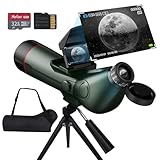 |
Smart Telescope, Professional Refractor Auto-focus Portable Digital Electronic Telescopes…
|
8.4 |
Read Review |
 |
Celestron NexStar 8SE Computerized Telescope – 8-Inch Schmidt-Cassegrain Optical…
|
8.2 |
Read Review |
 |
MEEZAA Telescope, Telescope for Adults High Powered Professional, 90mm…
|
8.0 |
Read Review |
Quick Review For Top 9 Dobson Telescope
Celestron StarSense Explorer 114AZ App-Enabled Telescope – 114mm Tabletop Dobsonian with Smartphone Dock & StarSense App – iPhone & Android Compatible – Easy-to-Use for Beginners

Celestron StarSense Explorer 114AZ App-Enabled Telescope. This is a tabletop telescope designed to make finding celestial objects almost automatic, perfect for someone just starting out in astronomy. It combines a simple, manual telescope with your smartphone’s intelligence to guide you. The core idea is that you don’t need to know the night sky to start exploring it. The key is the patented StarSense technology.
You mount your phone into the dock on the telescope tube, launch the app, and it does something special. Unlike a basic star chart app, it uses your phone’s camera and sky recognition to actually figure out exactly where the telescope is pointed. It analyzes star patterns overhead to pinpoint your position, turning your phone into a true navigation system. No confusing alignment procedures are needed. Once it knows where you are, the app becomes your personal guide.
It generates a list of “Tonight’s Best Targets” specific to your location and time. You’ll see planets, star clusters, and brighter nebulae and galaxies. The list changes throughout the year, so there’s always something new. To find an object, you simply follow the on-screen arrows that direct you to move the telescope. When you’ve centered the target, a bullseye on the screen turns green. Then, you look through the eyepiece, and the object should be right there in view.
Celestron Signature Series Moon by Robert Reeves Features A Superb Moon Astronomical Telescope, Black (22016)

The Celestron Signature Series Moon by Robert Reeves is a special telescope designed with one clear purpose: to make the Moon feel close and personal. It’s not a complicated, giant piece of equipment. Instead, it’s a premium tabletop Dobsonian that sits steady on any surface, giving you a rock-solid view without the fuss of a tripod.
The heart of it is a 76mm reflector optical tube, which is perfect for gathering enough light to reveal the Moon’s stunning details in sharp contrast.
This isn’t just any telescope; it’s a collaboration with renowned lunar imager Robert Reeves. The tube itself is a work of art, covered in detailed illustrations of the lunar surface. As you look at the scope, you’re seeing accurate depictions of craters, maria, and other features.
This artwork acts as your guide, helping you recognize and name the landscapes you’ll soon be seeing with your own eyes through the eyepiece. It bridges the gap between a picture in a book and the real, glowing object in the sky.
Ease of use was a top priority. The simple point-and-view Dobsonian mount means there’s no difficult setup. You just place it down, point it at the Moon, and you’re observing.
Sky-Watcher Classic 200 Dobsonian 8-inch Telescope – Solid-Tube – Simple, Traditional Design – Easy to Use, Perfect for Beginners, White (S11610)

The Sky-Watcher Classic 200 Dobsonian 8-inch Telescope is a fantastic choice for anyone starting there journey into astronomy. Its simple, traditional design makes it incredibly easy to use right out of the box, letting you spend less time fiddling and more time observing the night sky.
At the heart of this telescope is its large 8-inch aperture. This is what gathers all the light, and a bigger aperture means brighter, more detailed views.
You’ll see the cloud bands on Jupiter, the rings of Saturn, and countless deep-sky objects like nebulae and star clusters with impressive clarity. Compared to smaller scopes, it gathers 78% more light, which makes a huge difference when you’re looking at faint, distant objects. The primary mirror is a parabolic design coated with Radian Aluminum Quartz (RAQ), and both it and the secondary mirror are high-quality borosilicate with 94% reflectivity.
This optical system is what allows you to see stars as faint as magnitude 14.2.
Setup is straightforward. The telescope comes in two main pieces: a solid-tube optical assembly and a simple, rotating base. The whole thing weights about 45 pounds assembled, but you can easily move it in two parts. The base uses proprietary Teflon bearings for a smooth, steady rotation left and right. A key feature are the patented tension control handles on the sides.
Celestron StarSense Explorer 130AZ App-Enabled Telescope – 130mm Tabletop Dobsonian with Smartphone Dock & StarSense App – iPhone & Android Compatible – Easy-to-Use for Beginners

The Celestron StarSense Explorer 130AZ App-Enabled Telescope is designed to make finding your way around the night sky as simple as using a GPS. If you’ve ever felt lost trying to locate planets or star clusters with a traditional telescope, this model changes the game entirely. Its core feature is the patented StarSense technology, which uses your smartphone in a unique way. You don’t just hold your phone up; you dock it into the special bracket on the optical tube.
The app then analyzes a live image of the sky above you, calculating the telescope’s exact position. It’s a level of precision that standard stargazing apps simply don’t offer.
Once set up, the app provides a smartphone-powered sky tour. No prior knowlege is required. You’ll see a list of tonight’s best targets automatically generated for your location and time. The app then guides you with on-screen arrows, telling you exactly which way to move the telescope.
You simply nudge the manual altazimuth base until the target icon turns green. When it does, the object is centered in your eyepiece. This means you spend less time searching and more time actually viewing. From a city backyard, you can easily find the Moon, Jupiter with its moons, or Saturn’s rings.
Celestron StarSense Explorer 10-inch App-Enabled Telescope – 254mm Dobsonian with Smartphone Dock & StarSense App – iPhone & Android Compatible – Easy-to-Use for Beginners
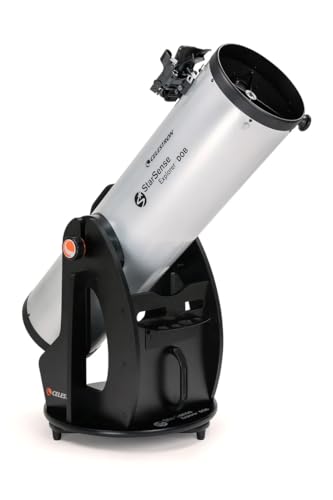
The Celestron StarSense Explorer 10-inch App-Enabled Telescope is a powerful tool designed to make finding celestial objects almost as easy as looking at them. It combines a large-aperture Dobsonian telescope with a unique smartphone app to guide you, removing the biggest hurdle for new astronomers: knowing where to point.
At its core is the patented StarSense technology. Unlike a standard star chart app, it uses your phone’s camera to actually analyze the star patterns above you.
It calculates the telescope’s exact position in real time, turning your phone into a precision navigation system. You simply dock your phone into the dedicated mount on the telescope tube, launch the StarSense Explorer app, and it handles the complex calculations.
The app then provides a simple, arrow-based interface. It generates a list of the best objects currently visible from your location—planets, galaxies, nebulae, and star clusters.
You select a target, and on-screen arrows show you exactly which way to move the telescope. No knowledge of constellations is required. When the target is centered, a bullseye turns green, telling you its ready to view in the eyepiece. This means you spend less time searching and more time observing, even from areas with some light pollution.
The telescope itself is a 10-inch (254mm) Newtonian reflector on a stable Dobsonian base.
Sky Watcher Sky-Watcher Classic 250 Dobsonian 10-inch Telescope – Solid-Tube – Simple, Traditional Design – Easy to Use, Perfect for Beginners (S11620)

The Sky-Watcher Classic 250 Dobsonian 10-inch Telescope is a fantastic choice for anyone wanting to start a journey into amateur astronomy. Its core strength lies in a simple, time-tested design that prioritizes what matters most: gathering lots of light to deliver stunning views of the night sky. This telescope is all about making deep-sky observation accessible and straightforward.
At the heart of this instrument is its large 10-inch aperture.
This is the key feature that sets it apart. A larger aperture means the telescope can collect significantly more light than smaller models, resulting in brighter, more detailed images. You’ll be able to see the cloud bands on Jupiter, the rings of Saturn, and faint deep-sky objects like nebulae and galaxies with remarkable clarity.
It achieves this level of performance at a cost that is often much lower than other telescope types of similar size, offering incredible value.
Ease of use is built right into the Dobsonian mount. It features proprietary Teflon bearings that provide a very smooth side-to-side (azimuth) movement, allowing you to effortlessly follow objects as they drift across the sky.
Smart Telescope, Professional Refractor Auto-focus Portable Digital Electronic Telescopes with 4K Astrophotography Camera, Internal And Externat Dual Screens Spotter for Adults and Beginners Astronomy
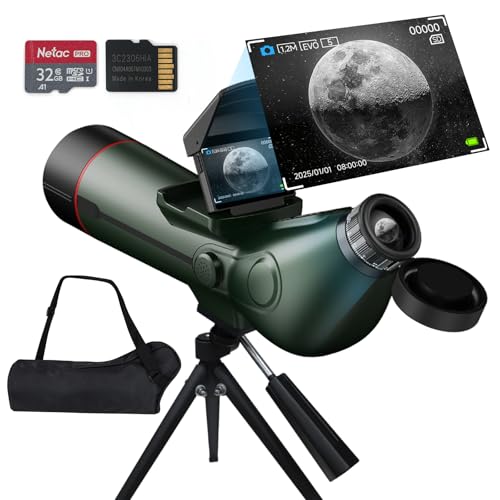
The Smart Telescope Professional Refractor is designed to bring the universe a bit closer, whether your an experienced astronomer or just starting out. It combines serious optical hardware with user-friendly digital features to simplify stargazing and astrophotography.
At its core, the telescope features exceptional optical performance. The 80mm aperture and 300mm focal length gather plenty of light, resulting in bright, crystal-clear views of celestial objects.
The starlight-grade sensor supports magnifications up to 350X, making it powerful for long-distance viewing. It excels in low-light conditions and is particularly effective for moon observation, capturing stunning 4K high-resolution images directly through its integrated system.
One of the standout features is the dual-screen display for real-time viewing. You have the traditional eyepiece, which includes adjustable vision compensation to match your eyesight.
But you also get a foldable external screen. This allows for direct, vivid observation without straining your eye, and it’s great for sharing the view with others. The built-in sunshade ensures the screen remains clear even in strong daylight, making it versatile for daytime use like birdwatching.
Capturing what you see is incredibly straightforward.
Celestron NexStar 8SE Computerized Telescope – 8-Inch Schmidt-Cassegrain Optical Tube – Fully Automated GoTo Mount with SkyAlign – Ideal for Beginners and Advanced Users – 40,000+ Object Database

The Celestron NexStar 8SE Computerized Telescope is a significant step for anyone wanting to move beyond simple star gazing. It combines a powerful optical system with modern automation to make finding celestial objects straightforward, even if your astronomy knowledge is just starting to grow.
At its heart is the 8-inch Schmidt-Cassegrain optical tube. This design is known for its compact size, making the whole setup relatively portable, but it packs a serious light-gathering punch.
That larger aperture means you can see finer details on our Moon, distinguish the cloud bands on Jupiter, and observe fainter deep-sky objects like galaxies and nebulae that smaller scopes simply can’t reveal. It’s a versatile optical system that suits both planetary and deep-sky viewing.
The real game-changer, though, is the fully automated GoTo mount. It uses the NexStar+ hand controller, which contains a database of over 40,000 celestial objects.
Instead of manually searching the sky with star charts, you select an object from the menu. The mount then automatically moves the telescope to point directly at your target and keeps it tracked in the eyepiece as it moves across the night sky. This feature opens up the universe by letting you see dozens of objects in a single night.
Getting this system ready is designed to be simple, thanks to SkyAlign technology.
MEEZAA Telescope, Telescope for Adults High Powered Professional, 90mm Aperture 800mm Refractor Telescopes for Astronomy Beginners Fully Multi-Coated with AZ Mount Tripod & Phone Adapter & Carry Bag

The MEEZAA Telescope for Adults High Powered Professional is a refractor telescope designed to make astronomy accessible. If your interested in the night sky, this model offers a serious entry point without being overly complex. Its built to deliver clear, bright images of celestial objects, helping you begin your journey into space observation from your own backyard.
At the core of this telescope is its 90mm large aperture.
The aperture is essentially the telescopes light-gathering window. A larger aperture, like this 90mm one, means it can capture significantly more light than smaller models. This results in brighter and more detailed views of the moon, planets, and even some brighter deep-sky objects like star clusters.
The fully multi-coated optical glass lenses further enhance this by reducing reflections and improving light transmission for sharper image clarity.
The telescope has an 800mm focal length, which provides a good balance between magnification and field of view. It comes with two eyepieces (10mm and 25mm) to get you started. The 25mm eyepiece is great for wider views, perfect for finding objects and observing the moon’s full disc. The 10mm eyepiece provides a closer look.
Dobson Telescope Buying Guide
A Dobson telescope is synonymous with simple, stable, and large-aperture design. This means you get a lot of light-gathering power for your money, offering stunning views of planets, nebulae, and galaxies. But to choose teh right one, you need to consider a few key factors.
Aperture: The Most Important Number
This is the diameter of the main mirror, measured in inches or millimeters. A larger aperture collects more light, revealing fainter objects and sharper details. An 8-inch model is a fantastic start for most people. But ask yourself: will you transport it often? A 6-inch is more portable, while a 10-inch or larger shows you more but is a much heavier companion.
Mount Stability and Ease of Use
The classic Dobsonian mount is a simple box that swivels and tilts. Its beauty is in its stability and intuitiveness—you just point and look. However, it doesn’t automatically track objects as the Earth rotates. For some, the hands-on nudging is part of the charm. For others, especially at high magnifications, manually following an object can be a pain point. Consider if you’d prefer a model with optional electronic tracking.
Focal Length and Eyepieces
The telescope’s focal length determines its “native” magnification power when combined with an eyepiece. A longer focal length is better for planets, while a shorter one offers wider views of star clusters. Most Dobs come with one or two basic eyepieces. Budget for a couple of additional eyepieces; thay are the single best upgrade you can make to improve your viewing experience. A good Barlow lens can also effectively double your eyepiece collection.
Portability and Storage
Be honest about where you’ll observe from and where you’ll keep the scope. A big 12-inch Dob is incredible under dark skies, but it’s heavy and needs a dedicated space. Smaller apertures are easier to carry out to the backyard or pack into a car. Also, check the tube’s length—can you store it easily? A compact “tabletop” Dobsonian might be perfect if you have limited space or want something for quick, casual viewing.
Frequently Asked Questions About Dobson Telescopes
What is a Dobson telescope?
A Dobson telescope is a type of reflector telescope on a simple, easy-to-use mount. It’s famous for giving you a lot of light-gathering power for your money. The design is very stable and intuitive to point at teh sky.
Are Dobson telescopes good for beginners?
Yes, thay are often recommended for beginners. Their simple design makes them easy to set up and use with minimal fuss. You don’t have to worry about complicated electronics or alignment to start viewing.
What can I see with a Dobson telescope?
You can see a lot! With a typical 6 or 8-inch model, you can see the moon’s craters, Jupiter’s moons, Saturn’s rings, and many star clusters and nebulae. Larger Dobsons show even more detail in galaxies.
What are the main drawbacks?
The main drawback is they are not designed for astrophotography of planets. They also tend to be bulky. Since they don’t track objects automatically, you have to nudge the telescope to keep a target in view as the Earth rotates.
How do I choose the right size?
Consider where you’ll store it and how you’ll transport it. A 6-inch is a great portable start. An 8-inch is very popular for its balance of power and size. Bigger than 10 inches gets heavy and less portable, but the views are stunning.
Do I need to collimate it?
Yes, all reflector telescopes need collimation, which is aligning the mirrors. It sounds scary, but it’s a simple process with a little tool. You’ll need to check it occasionally, especially after moving the telescope.
Can I use it for photography?
You can try simple lunar or planetary photography with a smartphone adapter. But for long-exposure deep-sky photos, a standard Dobson mount isn’t suitable. You’d need a different type of equatorial tracking mount.
Is the view upside down?
Yes, the image will be upside-down or mirrored. This is normal for astronomical telescopes and doesn’t matter for space viewing. It only becomes an issue if you try to use it for looking at things on Earth.
What accessories should I get?
A good start is a moon filter to reduce glare and one or two additional eyepieces for different magnifications. A red flashlight to protect your night vision is also essential. A collimation tool is a must-have accessory too.
Final Take
Its simple, stable design puts teh universe within reach. You don’t need complicated electronics or a confusing setup. Just point, look, and be amazed. This approach makes astronomy feel welcoming, not intimidating. You can spend your time actually looking at the stars instead of fumbling with controls. It’s a fantastic way to begin your journey into the night sky.
For anyone wanting serious light-gathering power without serious complexity, the choice is clear. A dobsonian telescope offers incredible value and a direct, immersive experience. It reminds you that the wonders of space are for everyone. So, find a dark spot, let your eyes adjust, and see what you can find. The view through the eyepiece is waiting for you.