Specialized optics to capture stunning images of space. That’s the promise of an astrophotography telescope, but it can feel like a daunting leap from a standard model. You might wonder if your skills are ready or if the investment is truly worth it for those breathtaking deep-sky shots.
Well, let’s demystify it together. Modern gear is more accessible than ever, designed to help you succeed. This review breaks down a top contender, looking at how it performs where it really counts: in the dark, under the stars. We’ll see if it’s the key to unlocking your best cosmic portraits yet.
Product Comparison Table: 9 Best Astrophotography Telescope
| Image | Why We Like This Product | Editor’s Rating | |
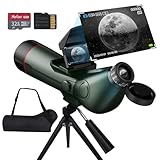 |
Smart Telescope, Professional Refractor Auto-focus Portable Digital Electronic Telescopes…
|
9.7 |
Read Review |
 |
DWARFLAB Dwarf 3 Smart Telescope – Portable, Capture Astronomy/Wildlife/Panorama,…
|
9.5 |
Read Review |
 |
Celestron NexStar 6SE Computerized Telescope – 6-Inch Schmidt-Cassegrain Optical…
|
9.3 |
Read Review |
 |
MEEZAA Telescope, 150EQ Newtonian Reflector Telescope for Adults Astronomy…
|
9.1 |
Read Review |
 |
SVBONY SV503 Refractor Telescope with Built-in Field Flattener, 70mm…
|
8.9 |
Read Review |
 |
SVBONY SV503 Refractor Telescope, 102mm F7 Extra Low Dispersion…
|
8.8 |
Read Review |
 |
Vaonis Vespera II X Edition Smart Telescope with AI…
|
8.6 |
Read Review |
 |
Vaonis Vespera Pro Smart Telescope with Observation Station Functionality…
|
8.4 |
Read Review |
 |
Dianfan Telescope,90mm Aperture 800mm Telescopes for Adults Astronomy,Portable Professional…
|
8.2 |
Read Review |
Quick Review For Top 9 Astrophotography Telescope
Smart Telescope, Professional Refractor Auto-focus Portable Digital Electronic Telescopes with 4K Astrophotography Camera, Internal And Externat Dual Screens Spotter for Adults and Beginners Astronomy
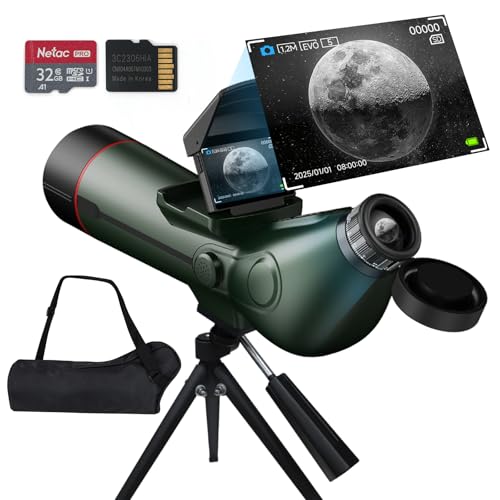
The Smart Telescope Professional Refractor is designed to make advanced astronomy and observation surprisingly straightforward. It combines high-end optics with user-friendly digital features, so whether your an experienced stargazer or just starting out, you get a powerful tool that’s ready to use.
At its core, the telescope features exceptional optical performance.
The 80mm aperture and 300mm focal length gather plenty of light, delivering bright, crystal-clear views of celestial objects. The starlight-grade sensor supports magnifications up to 350x, allowing for detailed long-distance viewing. It excels in low-light conditions, making moon observation and deep-sky viewing a vivid experience.
Plus, the integrated 4K astrophotography camera lets you capture those stunning high-resolution images directly.
A standout feature is the dual-screen display for real-time viewing. You have the traditional eyepiece, which includes adjustable vision compensation to match your eyesight. But you also get a convenient foldable external screen. This means you can observe directly on a vivid display, which is fantastic for sharing the view with friends or family.
DWARFLAB Dwarf 3 Smart Telescope – Portable, Capture Astronomy/Wildlife/Panorama, EQ Mode, Cloud Processing, 4K Auto-Tracking, Ultra-Light 3lb, Suits All Ages

The DWARFLAB Dwarf 3 Smart Telescope is a revolutionary piece of gear that redefines what a portable telescope can do. It’s not just for stargazing; it’s a versatile imaging tool designed for astronomy, wildlife, and panoramic landscapes, all packed into an incredibly light 3-pound frame.
Its ultra-light design is a game-changer. Weighing only 1.35kg, it’s the worlds most portable smart telescope, easily fitting into a standard backpack.
This means you can take it on hikes, camping trips, or simply into your backyard without any hassle. Spontaneous stargazing or capturing a distant bird becomes a real possibility, making it perfect for all kinds of outdoor adventures.
The heart of the Dwarf 3 is its dual imaging system. It features two lenses in one device. A telephoto lens handles detailed views of deep-space objects, wildlife, and landscapes.
A wide-angle lens is perfect for capturing expansive views like the Milky Way or star trails. During the day, you can use the wide-angle to find your target and the telephoto to zoom in, creating a seamless dual-camera experience for both day and night.
Getting professional-quality results is simplified by smart auto-tracking and cloud processing.
Celestron NexStar 6SE Computerized Telescope – 6-Inch Schmidt-Cassegrain Optical Tube – Fully Automated GoTo Mount with SkyAlign – Ideal for Beginners and Advanced Users – 40,000+ Object Database

The Celestron NexStar 6SE Computerized Telescope is a powerful instrument designed to bridge the gap between beginner-friendly operation and serious astronomical performance. It combines a classic, portable optical tube with a fully automated mount, making it a compelling choice for anyone looking to move beyond the basics and see more of the universe without the steep learning curve.
At its heart is a 6-inch Schmidt-Cassegrain optical system.
This design is key because it packs a large light-gathering aperture into a realtively compact tube. That 6-inch mirror is what allows you to see detailed craters on the Moon, the rings of Saturn, and even fainter deep-sky objects like the Orion Nebula. You get significant viewing power in a setup that’s easy to transport and store, which is a major advantage over bulkier telescopes.
The real magic for many users is the fully automated GoTo mount.
It comes with a hand control that contains a database of over 40,000 celestial objects—planets, stars, galaxies, and more. Instead of manually searching the sky with star charts, you simply select an object from the menu. The mount then moves the telescope directly to your target and keeps it centered in the eyepiece as the Earth rotates.
MEEZAA Telescope, 150EQ Newtonian Reflector Telescope for Adults Astronomy Beginners, Professional Astronomical Telescopes with Equatorial Mount, Phone Adapter, Tripod, Moon Filter and Large Carry Bag
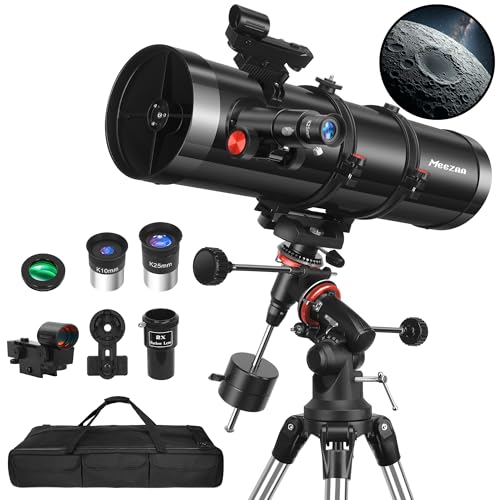
The MEEZAA 150EQ Newtonian Reflector Telescope is designed to bridge the gap between beginner-friendly use and serious astronomical performance. Its core advantage is the 150mm large aperture, which is a significant feature for any telescope. This large opening gathers a lot of light, meaning you’ll see brighter and more detailed images of celestial objects.
Whether your looking at the craters of the Moon, the rings of Saturn, or distant star clusters, this light-gathering power is what makes those views possible and impressive.
To make the most of that aperture, the telescope comes with a complete optical set. You get two eyepieces (25mm and 10mm) and a 2X Barlow lens, which work together to provide a range of magnifications from 26X up to 130X. This lets you zoom in for a closer look at planetary details or zoom out for wider star fields.
The included moon filter is a thoughtful add-on that cuts down the Moon’s bright glare, making for a more comfortable and detailed viewing session. A red dot finderscope helps you point the telescope in the right direction quickly, so you spend less time searching and more time observing.
Stability and control are crucial, and the 150EQ uses a stable German Equatorial Mount. This type of mount might seem a bit technical at first, but its designed for smooth and accurate tracking.
SVBONY SV503 Refractor Telescope with Built-in Field Flattener, 70mm F6.78 Extra Low Dispersion Achromatic Refractor OTA, Telescope for Adults, for Astrophotography Visual Astronomy
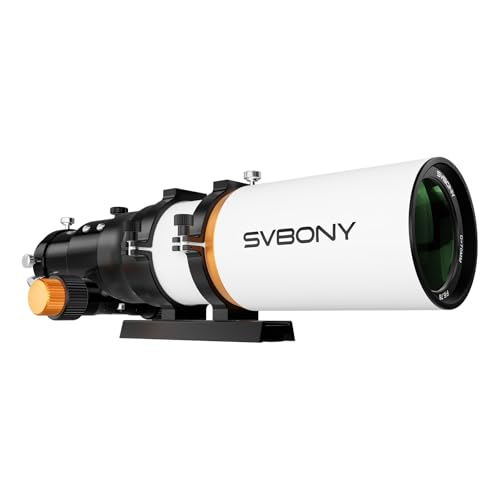
The SVBONY SV503 70mm Refractor Telescope is designed for the serious astronomy enthusiast who values clarity and convenience. This isn’t your average starter scope; it’s an optical tube assembly (OTA) built with key features that directly adress the needs of both visual observers and astrophotographers.
At its heart is a 70mm aperture extra-low dispersion (ED) glass objective. This, combined with the fast F/6.78 focal ratio, gathers plenty of light for bright views.
More importantly, the ED glass significantly cuts down on chromatic aberration. That’s the color fringing you often see around bright objects in cheaper telescopes. The result is images with truer colors and sharper detail on planets, the Moon, and deep-sky targets.
The standout feature is the integrated field flattener. Most refractors suffer from field curvature, where stars at the edge of the view appear blurry.
The SV503’s built-in corrector flattens that field across the entire image circle. For visual use, this means a wide, sharp view from center to edge. For astrophotography, it’s a game-changer. You can connect your camera directly to the focuser without needing to buy and attach a separate field flattener. This saves you money, reduces complexity, and gets you to an optimal imaging state right after focusing.
Precision control is provided by the dual-speed focuser.
SVBONY SV503 Refractor Telescope, 102mm F7 Extra Low Dispersion Achromatic Refractor OTA, Dual-Speed Focuser, 90mm Focus Travel,Telescope for Adults High Powered, for Deep Sky Planets Astrophotography

The SVBONY SV503 102mm F7 ED Refractor OTA is a serious optical tube assembly designed for astronomers who want a versatile instrument for both viewing and imaging. Its core is a 102mm aperture objective lens, which gathers a substantial amount of light. This light passes through an extra-low dispersion (ED) glass element, specifically S-FPL51, to tackle a common issue in refractors.
This design significantly reduces chromatic aberration, meaning you’ll see far less color fringing around bright objects like the Moon and planets. The result is images with sharper detail and more natural color, which is a huge benefit whether your looking through an eyepiece or a camera sensor. With a focal length of 714mm at a ratio of f/7, this telescope offers a balanced field of view.
It provides enough magnification for detailed planetary work while remaining fast enough for capturing wider deep-sky objects like nebulae and galaxies. The lenses are fully multi-coated (FMC) to improve light transmission across the spectrum and cut down on internal reflections. This coating ensures you get brighter, higher-contrast views.
Vaonis Vespera II X Edition Smart Telescope with AI Automated Deep Sky Refractor with Apochromatic Optics, CovalENS Mosaic Imaging & Integrated Dew Heater
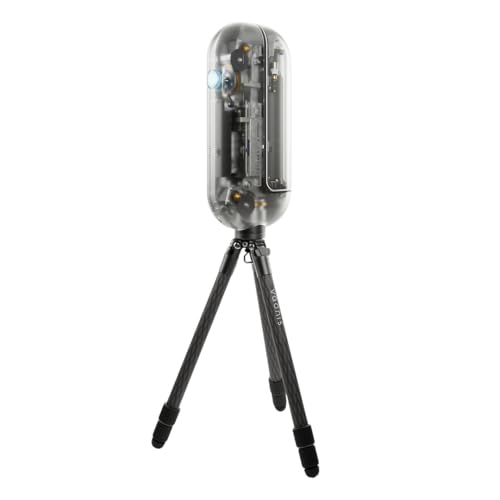
The Vaonis Vespera II X Edition Smart Telescope is a sophisticated instrument designed to simplify and enhance your deep-sky observation and astrophotography. It’s built for those who want serious results without the complexity of traditional telescope setups. This isn’t just a telescope; it’s a complete, automated imaging system. At its heart is the Optical Excellence Redefined.
The quadruplet apochromatic lens, featuring S-FPL52 glass and a built-in field corrector, is engineered for exceptional clarity. This system minimizes chromatic aberration to deliver high-contrast views and edge-to-edge sharpness in your images, capturing the subtle details of nebulae and galaxies. The whole unit is housed in a Durable One-Piece Chassis. This cast aluminum body, with its integrated iron counterweight, provides a solid, vibration-resistant foundation.
This protects your careful alignment and ensures the mechanics inside operate smoothly for consistent performance night after night. Those internal mechanics highlight the Precision Engineering for Stability. A worm screw drive, bronze gear wheel, and spring preload mechanism work together for exceptionally smooth and accurate tracking.
Vaonis Vespera Pro Smart Telescope with Observation Station Functionality – Compact Astrophotography Telescope – Automated Stargazing Camera – High-Resolution Imaging, App-Controlled for Astronomers

The Vaonis Vespera Pro Smart Telescope with Observation Station Functionality is designed for astronomers who want a serious, yet simplified, path to high-quality astrophotography. It’s not just a telescope; it’s a complete, automated observation station that fits in a backpack. You set it up, tell it what to look at through the app, and it does the rest—finding the target, tracking it, and capturing images directly to your smartphone or tablet.
At its heart is the new Starvis2 sensor, a Sony IMX676 chip that’s exceptionally sensitive to light. This means it can gather more detail from faint deep-sky objects like galaxies and nebulae in shorter exposure times. To match this powerful sensor, Vaonis developed a new premium quality optical field corrector. This lens system ensures the entire field of view is sharp and clear, so your images have pinpoint stars from the center all the way to the edges.
There’s no vignetting or distortion to compromise the data. A standout feature is CovalENS, an exclusive Vaonis technology. It allows the Vespera Pro to capture live, panoramic views of the night sky. Instead of waiting for a long, single exposure, you can watch a wide-field image build in real-time on your screen, which is a fantastic way to share the moment. For even more control, the Pro version gives you access to Expert Mode within the Singularity app.
Dianfan Telescope,90mm Aperture 800mm Telescopes for Adults Astronomy,Portable Professional Refractor Telescope for Beginners,with Stainless Tripod & Phone Adapter,Carry Bag

The Dianfan 90mm Aperture 800mm Telescope is designed to bring the night sky into clear view for beginners and enthusiasts alike. Its core strength lies in its 90mm objective lens, which is fully coated to enhance light gathering. This large aperture pulls in more light than smaller models, resulting in brighter and clearer images of celestial objects.
The high-transmission coatings on the optics work to improve contrast and color fidelity, giving you sharp, vivid views that make stargazing genuinely engaging. For magnification, this telescope offers a versatile range. It comes with two eyepieces and a 3x Barlow lens, allowing you to adjust your view from 32x all the way up to 240x power. This is enought to observe detailed lunar landscapes, like craters and seas on the Moon’s surface.
A 45-degree zenith mirror is included, which corrects the image orientation for terrestrial use. This means you can also use the telescope during the day for birdwatching or scenery, with a correctly oriented and upright view that makes tracking targets straightforward. Setting up the telescope is intentionally simple. The design is user-friendly, with clear instructions that most people can follow to get it assembled in roughly 15 minutes.
Astrophotography Telescope Buying Guide
An astrophotography telescope requires a stable mount and precise optics above all. But what else should you look for? This guide breaks down the key factors to help you choose the right tool for capturing the night sky.
Mount Type: The Foundation
Your mount are everything. A shaky one ruins hours of work. An equatorial mount, which rotates with the stars, is essential for long-exposure shots. A GoTo system that automatically finds celestial objects is a huge bonus, saving you precious imaging time. Don’t skimp here—this is your most critical purchase.
Aperture and Focal Length
Bigger aperture gathers more light, revealing faint nebulae and galaxies. But a shorter focal length offers a wider field of view, perfect for large targets like the Andromeda Galaxy. Consider what you most want to image. A fast focal ratio (like f/4 or f/5) is also key, allowing for shorter exposures.
Optical Design and Compatibility
Refractors are often recommended for beginners due to their low maintenance and sharp views. Reflectors offer more aperture for the money but may need occasional collimation. Crucially, ensure the telescope can handle the weight of your camera and any accessories. Check for a sturdy focuser that can connect to your gear.
Your Camera and Accessories
The telescope is just one part. You’ll need a dedicated astronomy camera or a modified DSLR. A field flattener or coma corrector is almost mandatory for crisp stars across the frame. Don’t forget about guide scopes and autoguiders—they’re the secret to pinpoint star tracking over many minutes. Plan your entire setup, not just the OTA.
Frequently Asked Questions About Astrophotography Telescopes
What’s the main difference between a visual and an astrophotography telescope?
Visual telescopes are optimized for looking through with your eye. Astrophotography scopes are designed to hold a camera steady for long exposures. They often have a shorter, wider tube to gather more light quickly, which is key for photos.
Do I need a special mount for astrophotography?
Yes, absolutely. The mount is arguably more important than the telescope itself. You need a sturdy equatorial mount that can track the stars’ motion perfectly. A shaky or inaccurate mount will lead to blurry, trailed images in your photos.
Can I use any telescope to take pictures of planets?
You can try, but results vary. Planets are small and bright. A telescope with a long focal length is better for capturing details like Jupiter’s bands. For deep-sky objects like nebulas, a shorter, faster telescope is generally preferred.
What does “fast” or “slow” mean for a telescope?
This refers to the focal ratio, like f/5 or f/10. A “fast” scope (lower number) gathers light quicker, allowing shorter exposures. This is great for faint nebulas. “Slower” scopes need longer exposures but can be better for planets.
Is a refractor or reflector telescope better for beginners?
Refractors (with lenses) are often recommended for starters. They are low-maintenance and have no central obstruction, providing high contrast. Reflectors (with mirrors) offer more aperture for the money but can require more collimation, or alignment.
How important is aperture for astrophotography?
Aperture is important, but it’s not the only factor. A larger aperture gathers more light, which helps. But for wide-field images of large nebulas, a smaller, fast telescope on a good mount is often the better choice to beging with.
Can I start with the camera on my phone?
You can take basic shots of the moon, but for serious astrophotography, you’ll need a dedicated astronomy camera or a DSLR. These cameras handle long exposures and low light much better than a phone sensor can.
Final Take
Capture teh night sky with this dedicated setup. It’s your direct line to the cosmos, letting you record details your eyes alone can’t see. Remember, this is a patient hobby. Your first night might be about learning the gear, not getting a perfect shot. That’s completely normal. Each session teaches you something new, bringing you closer to that stunning image you have in mind.
With consistent practice, your skills will grow. You’ll learn to track targets and process your data with more confidence. The right astrophotography telescope is a powerful tool that makes all this possible. So, take a deep breath, look up, and start your journey. The universe has been waiting for you to hit the record button.