The right lens changes everything you can see. It’s the difference between a blurry shape and a crisp, detailed world. When you’re peering into the microscopic, your microscope lenses are everything. They’re you’re gateway.
Choosing the perfect one can feel overwhelming, though. With so many options for magnification and clarity, where do you even start? This guide cuts through the confusion. We’ll help you find the lens that unlocks the hidden details you’ve been missing.
Product Comparison Table: 9 Best Microscope Lenses
| Image | Why We Like This Product | Editor’s Rating | |
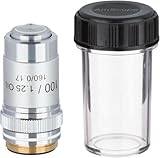 |
AmScope A100X 100X (Oil) Achromatic Microscope Objective
|
9.7 |
Read Review |
 |
AmScope A10X 10X Achromatic Microscope Objective
|
9.5 |
Read Review |
 |
AmScope SM05 0.5X Barlow Lens For SM Series Stereo…
|
9.3 |
Read Review |
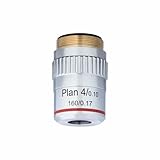 |
AmScope 4X Plan Achromatic Objective Lens with Knurled Ring
|
9.1 |
Read Review |
 |
25X Microscope Eyepieces Accessories for Optical Microscope Eyepieces Biological…
|
8.8 |
Read Review |
 |
KP – 0.5X Auxiliary Stereo Microscope Objective Lens -…
|
8.6 |
Read Review |
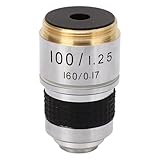 |
Hilitand 100X Microscope Objective, Brass Aluminum Alloy Material, Microscope…
|
8.4 |
Read Review |
 |
100X Microscope Lens for Raspberry Pi, C/CS-Mount, 0.12X ~…
|
8.2 |
Read Review |
 |
BORDSTRACT WF10X/20 Super Widefield 10X Stereo Microscope Eyepiece, 30mm,…
|
8.0 |
Read Review |
Quick Review For Top 9 Microscope Lenses
AmScope A100X 100X (Oil) Achromatic Microscope Objective
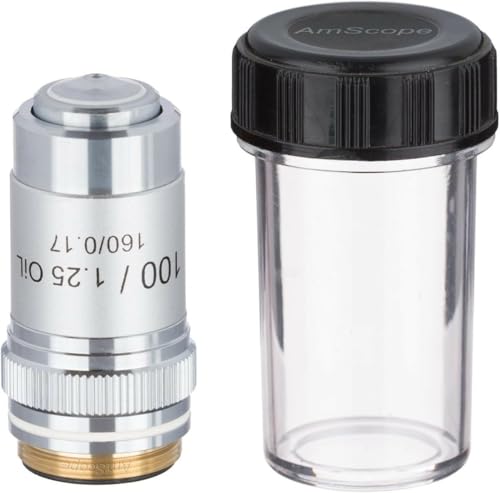
The AmScope A100X 100X (Oil) Achromatic Microscope Objective is a high-power lens designed for serious microscopic work. If your projects require viewing the finest details of a specimen, this objective is a critical tool. It provides 100X magnification, bringing tiny structures into clear veiw.
The achromatic corrections are key here; they minimize color distortion to give you sharp, true-color images that are accurate for analysis and documentation.
A major feature of this lens is its high Numerical Aperture (NA) of 1.25. In simple terms, a higher NA means the objective can gather more light. This results in superior resolution and brighter images, which is absolutely essential when working at such high magnification.
To achieve this optimal performance, the objective requires oil immersion. You’ll place a drop of immersion oil between the lens and your slide. This technique maximizes resolution by focusing light directly, revealing details that would otherwise be lost.
Compatibility is straightforward. The A100X is built for microscopes with a 160mm mechanical tube length and a 45mm parfocal distance. This ensures it aligns perfectly with your microscope’s optical path for a clear image.
AmScope A10X 10X Achromatic Microscope Objective

The AmScope A10X 10X Achromatic Microscope Objective is a fundamental component for anyone looking to upgrade or replace a standard 10X lens on their microscope. This objective is brand new and built to provide reliable, clear performance for a variety of viewing applications, from educational labs to hobbyist projects.
Its design focuses on delivering essential functionality without unnecessary complexity, making it a straightforward choice for improving your microscope’s capabilities.
At its core, this lens offers a 10X magnification power. This is a very common and versatile magnification level, perfect for when you need a broader view of a specimen before zooming in for finer detail.
It allows you to see larger structures clearly, making it ideal for examining things like whole insect parts, plant cross-sections, or mineral samples. Having a quality 10X objective is crucial because it often serves as your starting point for observation.
The term “Achromatic” is key here. Achromatic lenses are corrected for chromatic aberration, which is that colored fringe or blur you sometimes see around the edges of an image.
AmScope SM05 0.5X Barlow Lens For SM Series Stereo Microscopes (48mm)

The AmScope SM05 0.5X Barlow Lens is a precision optical accessory designed specifically for users of AmScope’s SM and SW series stereo microscopes. If you utilize one of these microscopes for tasks like inspection, assembly, or dissection, this lens fundamentally alters your workspace parameters by modifying the microscope’s native magnification.
Its core function is to reduce the total magnification of your microscope setup by half.
This might sound counterintuitive at first, but the benefits are highly practical for many applications. By cutting the magnification power, the lens simultaniously doubles both your working distance and your field of view. The increased working distance means you have more physical space between your microscope’s objective lens and the specimen you are examining. This is crucial if you need to manipulate tools, like soldering irons or forceps, under the microscope.
The larger field of view allows you to see a much wider area of your sample at once, which is excellent for surveying larger components or getting better context during observation.
The lens features a standard 1-7/8 inch (48mm) mounting thread, which is the common size for the specified microscope series. Installation is straightforward; you simply thread it onto the microscope’s objective turret or lens port, depending on your model.
AmScope 4X Plan Achromatic Objective Lens with Knurled Ring
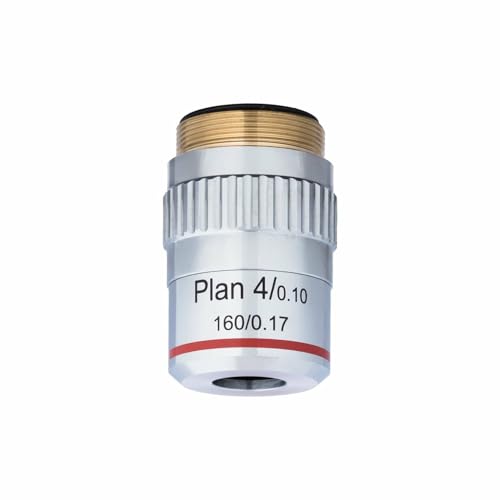
The AmScope 4X Plan Achromatic Objective Lens with Knurled Ring is a core component for upgrading or replacing a standard objective on your compound microscope. This lens is designed to provide a flat, clear field of view across its entire image plane, which is a key feature for detailed observation and documentation.
If your work or hobby involves looking at larger specimens or needing a wider starting view, this 4X magnification lens is often the first point of contact.
One of the primary considerations for any microscope user is compatibility. This objective is built to the DIN/JIS standard, which means it fits the vast majority of common compound microscopes that use a 160mm tube length.
The threaded mounting size is industry-standard, so you can typically swap it directly with an existing 4X lens or add it to an empty slot on your revolving nosepiece. The included knurled ring offers a textured surface for easy grip when you need to rotate it into position, a small but thoughtful design detail for daily use.
The “Plan Achromatic” designation is important to understand. “Achromatic” refers to the lens’s correction for color.
25X Microscope Eyepieces Accessories for Optical Microscope Eyepieces Biological Microscopes Lens (25X)

The 25X Microscope Eyepieces Accessories for Optical Microscope Eyepieces Biological Microscopes Lens (25X) is designed to be a straightforward upgrade or replacement part for your existing microscope setup. If your work or hobby involves looking at slides for extended periods, the clarity and comfort of your eyepiece becomes crucial.
This 25X model aims to address that directly by focusing on optical performance and user ergonomics.
Constructed from high-grade materials, this eyepiece is built for durability. The body feels solid and is meant to withstand regular use in both educational and professional environments. You won’t have to worry about it being fragile or easily damaged during normal handling. The lens elements inside utilize advanced optics to provide a widefield view.
This means you get a broader, clearer picture of your sample without having to constantly adjust the stage. The reduced distortion and sharper edge-to-edge clarity can make a significant difference in identifying details, wheter you’re examining biological cells or other specimens.
A key feature highlighted is its design to reduce eye strain. Observing through a microscope for long sessions can be tiring, but this eyepiece is engineered to be more comfortable for your vision.
KP – 0.5X Auxiliary Stereo Microscope Objective Lens – 1-7/8" 48mm Mounting

The KP 0.5X Auxiliary Stereo Microscope Objective Lens is a practical accessory designed to enhance the functionality of your existing stereo microscope. If your work or hobby involves detailed inspection, soldering, or assembly, this lens modifies two key aspects of your microscope’s performance: magnification and working distance. It’s a straightforward tool that can make a significant difference in your viewing experience.
This lens provides a 0.5X magnification factor.
That might sound like it reduces power, but its purpose is to effectively widen your field of view. You’ll see a larger area of your sample or workpiece at once, which is incredibly helpful for getting a broader context before zooming in for finer details. More importantly, it doubles the magnification of your microscope’s original objectives. So if your scope has a 2X lens, adding this accessory effectively gives you a 1X view.
This makes it a very versatile addition for tasks where you need to switch between overview and detail.
One of its most valued features is the substantial increase in working distance it offers. The lens can extend the distance between your microscope’s objective and the object you’re viewing to up to 11.21 inches (287mm). This extra space is crucial. It gives you much more room to maneuver tools, like tweezers or a soldering iron, under the lens without constantly bumping into it.
Hilitand 100X Microscope Objective, Brass Aluminum Alloy Material, Microscope Lens

The Hilitand 100X Microscope Objective is a precision lens designed for serious magnification work. If your projects or research require examining fine details at a cellular or micro-structural level, this objective is a critical component for your microscope setup.
Its built to deliver a clear, high-resolution image at 100 times magnification, allowing you to see what the naked eye simply cannot.
Constructed from a brass aluminum alloy, this lens housing offers a specific blend of qualities. The materials provide good durability and stability, which is essential for maintaining optical alignment. It also helps with heat dissipation during prolonged use.
The metal construction feels substantial and precise in your hands, contrasting with cheaper plastic alternatives that might warp or degrade. This choice of material speaks to its intended use in applications where reliability matters.
As a microscope objective, it screws directly into the revolving nosepiece of compatible microscopes. You’ll need to ensure your microscope’s thread type matches, typically RMS standard.
100X Microscope Lens for Raspberry Pi, C/CS-Mount, 0.12X ~ 1.8X Optical Magnification, Compatible with Raspberry Pi HQ Camera

The 100X Microscope Lens for Raspberry Pi, C/CS-Mount is a specialized optical tool designed to turn your Raspberry Pi HQ Camera into a powerful inspection and observation device. It bridges the gap between hobbyist electronics and professional-grade imaging, allowing for detailed visual analysis right on your workbench.
At its core, this lens offers a versatile optical magnification range from 0.12X up to 1.8X.
This flexibility means you can frame a relatively wide area for context or zoom in tightly on minute details, all with the clarity of a true optical lens system. The “100X” in the name often refers to the total system magnification achievable when combined with digital zoom or specific sensor crops, but the foundation is this high-quality optical zoom.
It’s built to industrial standards, so the details and tiny things in your subject, weather its a circuit board, a small insect, or a mineral sample, are rendered clear and visible with minimal distortion.
Compatibility is straightforward. The lens is designed specifically for mounting to the camera module of the Raspberry Pi HQ Camera. It uses a standard C/CS-mount, which is the professional norm for machine vision lenses.
BORDSTRACT WF10X/20 Super Widefield 10X Stereo Microscope Eyepiece, 30mm, Black

The BORDSTRACT WF10X/20 Super Widefield 10X Stereo Microscope Eyepiece is a core component for anyone looking to upgrade their microscope’s viewing experience. Its designed to provide a significant boost in clarity, comfort, and compatibility for your detailed work.
At its heart is a 10x magnification power that brings your subjects into sharp, high-resolution focus, allowing for precise observation of fine details that are crucial in fields like electronics repair, biological study, or hobbyist inspection. A key feature of this eyepiece is its Super Widefield design. This means the lenses are engineered to give you a much larger field of view compared to standard eyepieces.
You’ll see more of your sample at once without having to constantly adjust the stage, which streamlines your workflow. More importantly, this wide-angle view significantly reduces eye strain and neck fatigue during those long sessions at the bench, making your work more comfortable and efficient over time. The lenses themselves are crafted from high-quality optical glass and feature a multi-layer coating.
Microscope Lenses Buying Guide
Microscope lenses are teh critical component; here’s what to prioritize. Think of them as the eyes of your instrument. A poor lens means a poor view, no matter how good the rest of your microscope is. This guide cuts through the technical jargon to help you choose the right ones for your needs, whether you’re a student, hobbyist, or professional.
Magnification & Numerical Aperture
It’s not just about how much you zoom in, but how much detail you can actually see. A 40x lens with a high Numerical Aperture (NA) will show you more than a 100x lens with a low one. Always check the NA rating—it’s the real secret to a crisp, bright, and detailed image. Don’t just chase the highest magnification number.
Lens Construction & Correction
Cheap lenses often have optical flaws like color fringing (chromatic aberration) or distorted edges. Look for terms like “achromatic” (corrects for two colors) or the superior “plan achromatic” (also flattens the field of view). For serious work, these corrections are non-negotiable. They make the difference between a frustrating blur and a clear, true-to-life image.
Compatibility With Your Microscope
This is the most crucial step. Not all lenses fit all microscopes. You must match the mounting thread (like RMS standard) and the mechanical tube length of your microscope body. Using an incompatible lens can damage equipment or simply not work. Always double-check your microscope’s manual before you buy—it’ll save you a major headache.
Your Intended Application
What will you be looking at? Standard prepared slides? Living pond critters? Metallurgical samples? Different tasks need different lenses. For example, observing thick specimens might require a long working distance lens. For viewing living cells, phase contrast lenses are a game-changer. Align your choice with your primary use to get the best value.
Frequently Asked Questions About Microscope Lenses
What’s teh difference between an objective and an eyepiece lens?
The objective lens is the one closest to your sample. It’s primary job is to gather light and create the first magnified image. The eyepiece lens is the one you look through. It magnifies that image further so you can see it.
What do the numbers on an objective lens mean?
You’ll usually see two numbers, like 10x/0.25. The first (10x) is the magnification power. The second (0.25) is the numerical aperture (NA). A higher NA means better resolution and the ability to see finer details.
Are microscope lenses universal?
Unfortunately, no. Lenses have specific thread sizes and optical standards. An objective lens must match your microscope’s brand and model for proper fit and focus. Always check compatibility before you buy a new one.
What is parfocality?
Parfocal lenses are super convenient. When you switch between different objective lenses, your sample stays mostly in focus. You only need tiny adjustments. Most modern microscopes use parfocal objectives, but it’s good to confirm.
How do I clean a microscope lens properly?
Be very gentle. First, use a soft air blower to remove dust. Then, use lens paper and a special lens cleaning fluid. Never use tissues or your shirt, as they can scratch the delicate coating. Always apply fluid to the paper, not directly to the lens.
What does “infinity-corrected” mean?
This refers to the optical design. In infinity-corrected systems, light rays exit the objective as parallel beams. This allows you to add filters or other devices in the light path without losing image quality. Most newer, research-grade microscopes use this design.
Can I use any lens for oil immersion?
Only use oil on lenses specifically marked for it, often with “oil” or “OIL” on the barrel. Using oil on a dry lens will ruin it. The oil helps capture more light for higher resolution at magnifications like 100x.
Our Verdict
Sharpen your view by selecting the right lens. It’s the final, crucial step in building a microscope that truly works for you. Think about what you need to see most often. A good all-around lens is a smart starting point, but don’t be afraid to add another for more detail or a wider view later on. The right choice makes every session clearer and more productive.
In the end, your goals and budget guide the decision. Whether you’re examining tiny circuit boards or observing pond life, matching the microscope lenses to your task is key. Take your time comparing options, and you’ll end up with a setup that brings your work into perfect focus for years to come. It’s a simple upgrade with a big impact.